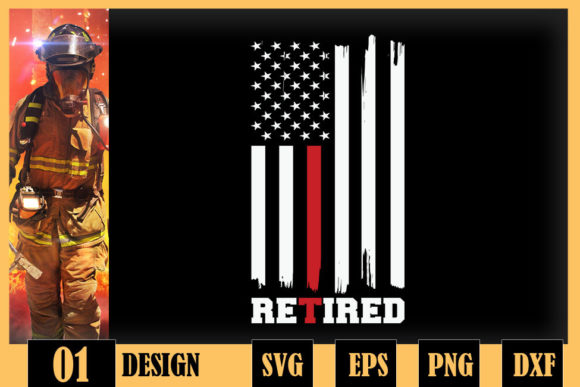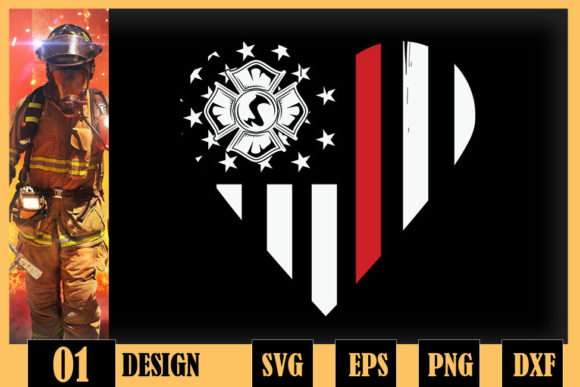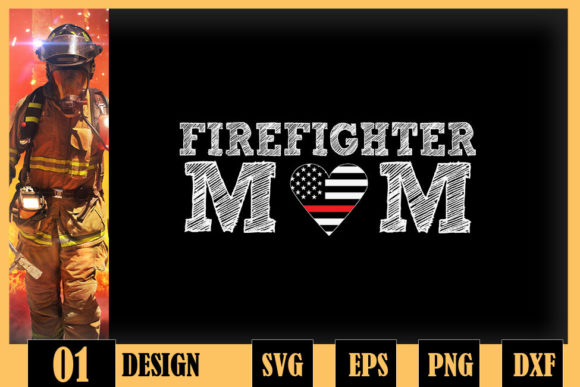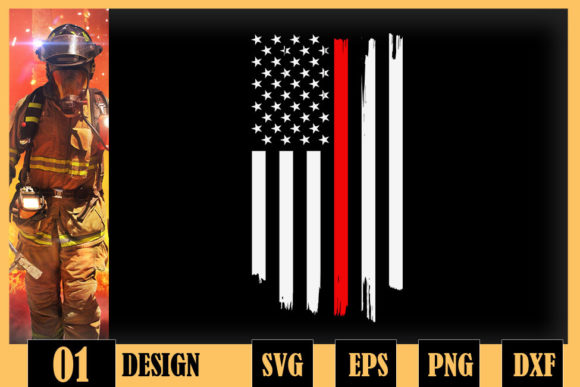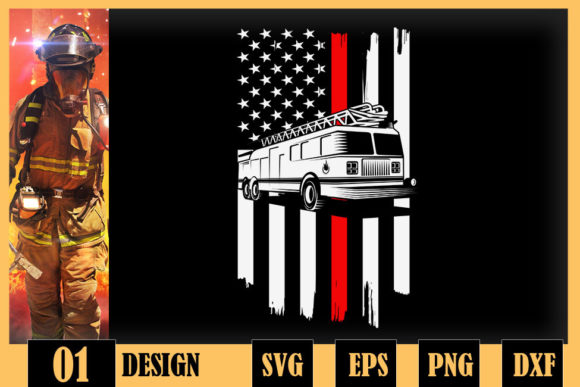
Fireman American Flag Thin Red Line
As a designer who spends more time than I care to admit staring at stitch charts and testing fabric samples, I approach every new machine embroidery design with a mix of skepticism and curiosity. The market is flooded with patriotic themes, but few capture the specific emotional resonance required for today’s handmade goods. When I first pulled up the Fireman American Flag Thin Red Line, I didn’t just see a flag; I saw a story waiting to be stitched. This piece sits squarely in the intersection of Crafts and Graphics, offering a visual narrative that speaks directly to first responders and their communities. But does it translate well from screen to hoop? Can it hold up as a viable asset for an Etsy seller or a boutique owner looking to create meaningful personalized gifts? Let’s dive into the practical realities of using this design.
The First Impression: Mood and Visual Weight
The immediate takeaway from the Fireman American Flag Thin Red Line is its boldness. In embroidery, visual weight is everything. If a design feels too light on the screen, it often disappears once stitched onto fabric. Here, the "Thin Red Line" motif provides a striking horizontal anchor that cuts through the traditional red, white, and blue palette. It creates a sense of respect and solemnity that works exceptionally well for commemorative items.
From a layout perspective, the design balances the chaotic energy of waving flag stripes with the structured geometry of the canton. For a designer, this balance is crucial. It means the design won’t look cluttered when scaled down for smaller projects like baby onesies or cap patches, yet it retains enough detail to command attention on larger canvases like sweatshirts or tote bags. The visual personality is confident without being aggressive, making it suitable for both professional uniform accents and casual home decor.
Real-World Application: From Screen to Stitch
I recently tested this concept on a series of mockups to see how it would perform in actual production scenarios. The versatility of this file is impressive, largely because it functions effectively across multiple software platforms, including Cricut Design Space, Silhouette Studio, Corel Draw, Adobe Illustrator, and Adobe Photoshop. This cross-platform compatibility makes it a robust choice for digital product sellers who need assets that can be adapted for various outputs.
Consider a scenario where you are preparing a custom embroidered tote bag for a local fire station fundraiser. The Fireman American Flag Thin Red Line offers high contrast against canvas fabric. When stitched, the satin stitch outlining the elements will provide a crisp edge that defines the shape clearly. However, if you were to use this on a dark-colored hoodie, the thread color selection becomes critical. You would need to ensure the red line pops against the background, possibly requiring a contrasting underlay or a specific thread shade to maintain legibility.
For small business merchandise, this design shines in the realm of embroidered patches. Patches allow for a concentrated display of detail. The thin red line acts as a powerful focal point, drawing the eye immediately. Customers buying these items are often looking for something that signifies identity or support. A well-executed patch featuring this design communicates professionalism and pride, enhancing the perceived value of the finished product.
Sweatshirt Embroidery and Apparel Decor
When applying this to custom apparel, such as crewneck sweatshirts or t-shirts, placement is key. Center chest placement works best for a balanced look, while left-chest placements require careful scaling. The design’s inherent symmetry allows it to shrink down gracefully, though you must monitor the stitch density closely. If the density is too high for a small area, the fabric may pucker, ruining the clean lines of the flag. Always test on scrap fabric first to gauge how the threads interact with your chosen garment material.
Where Caution Is Required
No design is perfect for every situation, and the Fireman American Flag Thin Red Line has its limitations. Textured fabrics, such as heavy tweeds or nubby knits, can obscure fine details. If you are working with a fabric texture that is highly pronounced, the subtle lines of the "thin red" motif might get lost in the weave. In these cases, a smoother cotton twill or polyester blend would yield a much sharper result.
Stretchy fabrics present another challenge. Unless you are using a sturdy tear-away or cut-away stabilizer, the tension of the stitches could distort the circular motion of the hoop, warping the flag’s shape. Similarly, curved surfaces like baseball caps require precise digitizing to accommodate the curve. If the design files provided do not account for curvature, you may end up with distorted corners or uneven stitching along the brim.
Dark fabrics demand extra attention to thread contrast. While the red line is vibrant, it can blend into black or navy backgrounds if the lighting isn’t right. I recommend running a black-and-white mockup of the design before committing to production. This simple step helps you visualize how the negative space and positive shapes will interact without the distraction of color.
Impact on Brand and Customer Trust
In the world of craft business, presentation is half the battle. A clean, well-stitched design builds customer trust instantly. When a buyer sees a sharp embroidery project with no loose threads or misaligned elements, they assume the entire brand operates with that level of care. The Fireman American Flag Thin Red Line, when executed correctly, elevates the handmade product from a simple craft item to a piece of wearable art.
This design also enhances brand consistency for shops specializing in patriotic or first-responder-themed goods. By incorporating this specific aesthetic into your lineup, you signal to your audience that you understand the nuances of their interests. It shows you aren’t just throwing random graphics onto products; you are curating designs that resonate emotionally. This connection drives engagement and encourages repeat purchases.
Practical Designer Notes for Success
To ensure the best results with this design, keep these practical tips in mind:
- Test on Scrap Fabric: Never jump straight into your final garment. Use a scrap of the same material to check tension and stability.
- Check Thread Colors: Verify that your thread spools match the intended mood. Bright reds work for vibrancy, while muted tones offer a vintage feel.
- Review Stitch Density: High-density areas can cause bulk. If possible, simplify dense sections for smaller hoops.
- Confirm Hoop Size: Ensure the design fits within your machine’s standard hooping dimensions to avoid awkward trimming.
- Inspect Small Details: Zoom in on the digital file. Are the lines distinct? Will they stitch cleanly?
- Use Proper Stabilizer: The right stabilizer prevents puckering and supports the fabric during stitching.
- Verify Licensing: Before selling finished items or distributing digital embroidery files, confirm the licensing terms. Commercial use rights vary, and clarity here protects your small shop product from legal issues.
Ultimately, the Fireman American Flag Thin Red Line is a strong candidate for any designer looking to add depth and meaning to their portfolio. It bridges the gap between graphic impact and textile tradition. Whether you are creating a holiday gift, a nursery decor piece, or a commercial embroidery batch for a local business, this design offers the flexibility and emotional weight needed to succeed. Just remember: good design starts with preparation. Test thoroughly, choose your materials wisely, and let the craftsmanship speak for itself.