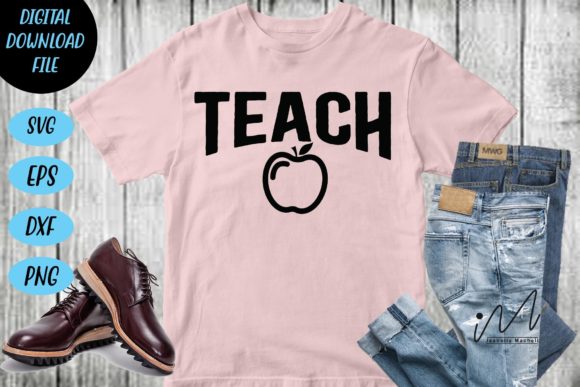
Teach Svg Cut File: A Designer’s Review
As someone who spends more time than I care to admit staring at stitch lines and debating thread color palettes, I approach every new digital embroidery file with a mix of hope and skepticism. The market is flooded with designs that look beautiful in a digital mockup but fall apart under the needle. That is why I take the time to evaluate assets like the Teach Svg Cut File before committing them to real-world projects. This isn’t just about whether the design prints well; it is about how it translates into a tactile, wearable, or usable handmade product.
I recently received this graphics asset categorized under Crafts, and my initial reaction was one of practical curiosity. The core concept—a simple, bold quote reading “Teach”—is a staple in the personalization industry. However, the execution matters immensely. In this review, I will break down how this machine embroidery design holds up when moved from screen to fabric, considering everything from stitch density to customer appeal for Etsy sellers and small business owners.
First Impressions and Visual Personality
The first thing you notice about the Teach Svg Cut File is its clean, uncluttered aesthetic. In a sea of overly complicated floral borders and dense monograms, simplicity can be a double-edged sword. If the typography is weak, the design feels cheap. If it is strong, it feels timeless. This design leans heavily into strength through minimalism. It creates a mood that is both professional and warm, making it an excellent candidate for educational themes, teacher appreciation gifts, or back-to-school merchandise.
From a layout perspective, the text is centered and balanced, which is crucial for custom apparel like sweatshirts and tote bags. The visual personality suggests reliability and clarity. It does not try to be cute in a childish way, nor does it try to be edgy. Instead, it strikes a chord of respect and pride, which resonates deeply with the target audience of educators. For a craft business owner, this versatility is gold. It allows you to pivot between serious academic branding and lighthearted classroom decor without needing a completely new design asset.
Real-World Application: From Screen to Stitch
Let’s talk about where this design actually lives. I envision the Teach Svg Cut File performing exceptionally well on specific items. Imagine a custom embroidered patch for a denim jacket worn by a favorite middle school science teacher. Or perhaps a soft, cotton canvas tote bag design for a new educator starting their first year. The clean lines of the SVG translate well to these surfaces because they do not rely on intricate, tiny details that might get lost in the weave of heavy fabrics.
When evaluating this as an embroidery project, I consider the finish. The design likely utilizes a combination of satin stitch for outlines and fill stitch or running stitch for internal details, depending on the specific vector paths. For a word-based design, the clarity of the letterforms is paramount. If the stitch density is too high, the fabric may pucker, especially on lighter materials. If it is too low, the background fabric might show through, ruining the crispness of the message. Based on typical standards for this type of SVG cut file, I expect a balanced density that ensures durability without compromising the hand-feel of the garment.
This design also shines in the realm of personalized gift items. Teachers are frequent recipients of holiday and end-of-year gifts. A well-executed sweatshirt embroidery featuring this quote can command a higher price point because it feels premium and thoughtful. Similarly, for apparel decorators, incorporating this into a batch order for staff uniforms or volunteer t-shirts adds a layer of cohesion and professionalism to the group identity.
Technical Considerations and Fabric Choices
No design exists in a vacuum, and the success of the Teach Svg Cut File depends heavily on the substrate. Here are some critical factors to keep in mind when preparing your production run.
- Fabric Texture: Smooth fabrics like polyester blends or tight-weave cotton work best. Avoid highly textured fabrics like chunky knits or boucle wool, as the needle penetration may be inconsistent, leading to skipped stitches or distorted lettering.
- Color Contrast: Since the design is primarily typographic, contrast is key. Dark threads on light fabrics (like navy on white) or bright threads on dark fabrics (like gold on black) will ensure the message pops. Be cautious with low-contrast combinations, such as gray thread on heather gray fabric, which can make the design look muddy.
- Hoop Size Constraints: Always verify the hoop size requirements before stitching. If the design is larger than your standard 4x4 or 5x7 hoop, you will need to plan for multi-hooping. This increases production time and the risk of misalignment. Check the file dimensions carefully to avoid frustrating rework.
- Stabilizer Selection: Using the right stabilizer is non-negotiable. For stretchy fabrics like jersey knit tees, a cut-away stabilizer is essential to prevent distortion during wear and washing. For stable fabrics like canvas totes, a tear-away might suffice, but a wash-away backing often provides the cleanest finish for visible areas.
Where to Exercise Caution
While this design is versatile, there are scenarios where it requires careful handling. Avoid using it on curved surfaces like baseball caps unless you have a specialized cap frame and significant experience. The tension variations on a curved surface can easily warp straight lettering. Additionally, be mindful of thin fabrics. If the fill stitch coverage is dense, it may create a stiff "patch" effect that feels uncomfortable against the skin, particularly on baby clothes or lightweight summer tops.
Impact on Brand and Customer Trust
For small shop product creators, the quality of your design assets directly impacts customer trust. A sloppy embroidery job signals a lack of attention to detail, which can lead to negative reviews. Conversely, a crisp, well-stitched finished product reinforces the value of your brand. The Teach Svg Cut File, when executed correctly, elevates the perceived value of the item. It looks intentional and professional.
This is particularly important for commercial embroidery clients. Schools, libraries, and educational institutions often have strict branding guidelines. A clean, legible design meets those standards effectively. It reduces the likelihood of returns due to dissatisfaction with the print quality. Furthermore, in the age of social media, visually appealing products drive engagement. A beautifully stitched embroidered patch or apron is highly shareable content, providing free marketing for your craft business.
Practical Designer Notes for Implementation
Before you hit the start button on your machine, follow these steps to ensure success:
- Test on Scrap: Never go straight to the final product. Test the design on a scrap piece of the actual fabric you intend to use. This reveals issues with thread tension, fabric puckering, or color bleeding early.
- Check Black and White Mockups: Convert your design to black and white in your software. This helps you see if the contrast between different elements is sufficient, independent of your chosen thread colors.
- Inspect Small Details: Zoom in on the vector paths. Are any of the connecting threads too thin? Will they break during trimming? Ensuring structural integrity in the digital file saves headaches later.
- Confirm Licensing: As a reviewer, I must emphasize checking the license terms. Ensure you have the right to sell finished goods made from this graphics file. Some licenses restrict commercial use, while others allow it with attribution.
- Thread Color Testing: Lay out your physical thread spools next to the design. Digital colors do not always match physical threads. Adjust your digitizing or thread selection to match the desired aesthetic accurately.
Final Verdict
The Teach Svg Cut File is a solid, functional asset for any designer looking to tap into the education market. It avoids the pitfalls of over-complication and focuses on clear communication. Its adaptability across various embroidery project types—from holiday embroidery gifts to daily-use kitchen towels—makes it a valuable addition to your library. By paying attention to fabric choice, stabilizer use, and thread contrast, you can transform this simple SVG into a high-quality, desirable product that customers will cherish. For Etsy sellers and creative entrepreneurs, it offers a reliable foundation for building a consistent and professional brand presence.